
The Flood Was the Plan
The Flood Was the Plan – 2026
How a single day in October 2023 exposed three decades of strategic delusion and why the world built after it cannot resemble the world before.
By Meer Yassir Ahmed
There is a moment in every genuinely historical event when you can see, if you are willing to look clearly, that the event was not a rupture. It was a conclusion.
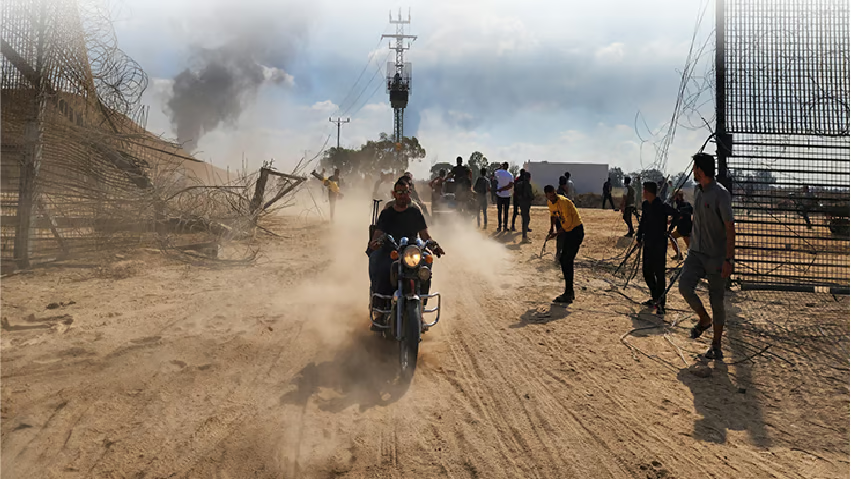
October 7, 2023, was that moment. What Hamas called Operation Al-Aqsa Flood was not spontaneous. It was not reactive. It was not desperation. It was the execution of a documented, multi-year strategy a strategy built on a sophisticated reading of Israeli psychology, American diplomatic overextension, Arab elite calculation, and the oldest principle in insurgent warfare: make the powerful destroy themselves.
To understand what happened that morning, you have to understand what was supposed to happen that week.
- The Deal That Was Almost Closed
By late September 2023, Washington believed it was weeks perhaps days from delivering the most significant diplomatic restructuring of the Middle East since the Camp David Accords. The architecture was intricate but legible: Saudi Arabia would normalize relations with Israel; in return, the United States would provide Riyadh with a formal security guarantee, assistance for a civilian nuclear program, and expanded access to advanced American weapons systems. Palestinians would receive some form of diplomatic acknowledgement a “practical pathway” to statehood in the language of US officials, deliberately vague, deliberately deferrable.
Saudi Arabia’s core demands in March 2023 was already outlined: a formal US defense pact, nuclear enrichment on Saudi soil, and eased arms transfer restrictions. The Brookings Institution later summarized what Washington was actually offering and the gap between Saudi expectations and American delivery was real but shrinking. US Secretary of State Antony Blinken told AIPAC in June that Saudi-Israel normalization was “in the national security interest” of the United States, and vowed Washington would play a “crucial role.” He had a trip to Riyadh and Israel scheduled for October 10 specifically to work on the Palestinian component of the deal.
On September 20, Crown Prince Mohammed bin Salman told reporters, in rare English, that normalization with Israel was getting “closer every day” the “biggest historical deal since the Cold War.” On September 21, Netanyahu stood at the United Nations podium and declared Israel was “at the cusp of an historic peace with Saudi Arabia.” He displayed a map of a “new Middle East,” celebrated it as a coming triumph, and made one thing crystal clear: Palestinians “should not have a veto” over this process. That was a Thursday. By the following Saturday morning, the map was in ruins.
What Sinwar Already Knew: Yahya Sinwar did not need to watch Netanyahu’s UN speech to understand what was at stake. He had been watching the Abraham Accords since 2020. He had watched the UAE, Bahrain, Morocco, and Sudan normalize with Israel. He had watched the Saudi track build momentum. He had understood, with cold analytical clarity, that the regional order was being redrawn over Palestinian heads that the Arab state system was preparing to make peace with Israeli occupation as a permanent condition, not a temporary one.
The settler population in the West Bank had tripled since Oslo from 280,000 in 1993 to approximately 950,000 by 2023. The two-state framework was not stalled. It was dead. The Abraham Accords were burying the Palestinian question diplomatically. And Netanyahu’s own words documented in a March 2019 briefing to Likud members confirmed what Palestinian leaders had long suspected: Israeli strategy was deliberately to “bolster Hamas” as a counter-weight to the Palestinian Authority, keeping Gaza and the West Bank politically separated, ensuring there was “no partner” for a state.
That policy which Naftali Bennett called “protection money” and the New York Times documented in damning detail had produced the most perverse strategic inversion in modern Middle Eastern history: Israel’s prime minister was simultaneously approving Qatari cash transfers to the organisation he would later cite as justification for genocide-scale retaliation.
Hamas exploited this completely. The August 2022 Sinwar memo, recovered by Israeli forces after October 7, showed a detailed plan: breach the fence with bulldozers, enter communities in waves, set buildings on fire with gasoline, film everything, broadcast it live. The memo did not describe a military operation in conventional terms. It described a propaganda event with a military component a psychological shock designed to be seen by the entire world, including the Arab leaders preparing to formalize peace with Israel.
III. The Insurgent’s Calculation
What Hamas executed on October 7 has a name in strategic literature. It is called provocation-overreaction: the deliberate triggering of a powerful adversary’s worst instincts in order to destroy its legitimacy in the eyes of the population it claims to protect or, in this case, the world it claims to lead.
David Galula, the French officer whose work on counterinsurgency became the bedrock of US military doctrine, made the point decades ago: in irregular conflict, the population is the prize. Military force applied disproportionately against civilians does not destroy insurgencies. It produces them. David Kilcullen refined this in The Accidental Guerrilla documenting how transnational militants deliberately “infect” local spaces in order to bait powerful states into interventions that turn neutral populations into fighters. His observation that all jihadist strategists need to do is “plant a flag and Americans will panic and send an army” has been cited in military academies for fifteen years. It was operational doctrine in Gaza.
The IRA used the same logic at Bloody Sunday: provoke the British military into firing on a civil rights march, create a massacre, multiply recruitment a hundredfold. The Viet Cong used it in the escalation politics of 1964-65: manoeuvre the United States into a massive land war on terrain where American firepower would produce the images that would eventually break American political will. Hezbollah used it in 2006: kidnap two soldiers, absorb a 34-day war, emerge despite the devastation with strengthened “resistance” credentials and a narrative of Israeli aggression burnt into regional memory.
In every case, the insurgent’s calculation was identical: I cannot destroy this military machine directly. But I can make it destroy itself.
Hamas’s version was more ambitious than any of its predecessors. Sinwar and Deif did not want a battle. They wanted a flood.
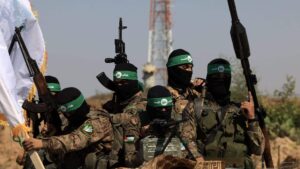
- The Flood
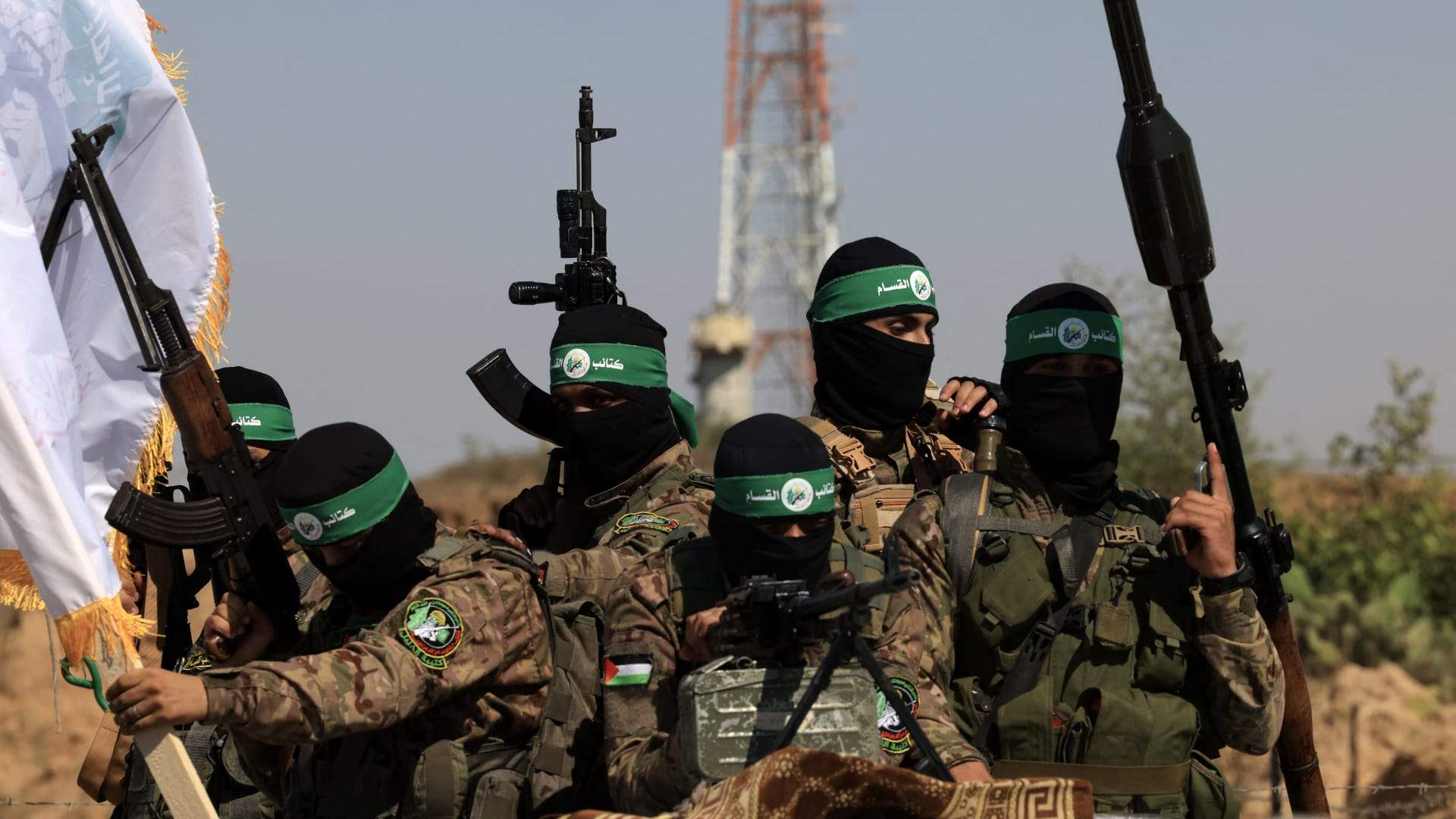
On October 7 at 6:29 AM, more than 2,200 rockets were fired simultaneously, overwhelming Iron Dome. Simultaneously, more than 1,000 fighters breached the fence at dozens of points, entered 21 communities, attacked military bases, slaughtered approximately 1,200 people the majority civilians and took 251 hostages. Hamas drones had already disabled border cameras and automated weapons systems. Paragliders crossed overhead. Naval fighters attempted a beach landing. It was tri-domain, pre-planned, and filmed in real time, exactly as Sinwar’s memo had specified.
The West Point Combating Terrorism Center’s assessment is unambiguous: this was not an intelligence failure in the ordinary sense. It was an Israeli institutional failure and a Hamas intelligence success. Hamas had deceived Israeli signals intelligence through communications discipline, moved planning underground, and used monitored channels to signal false deterrence telling Israel what it wanted to hear while preparing the opposite. The “Jericho Wall” document, which laid out the attack plan in detail, had been in Israeli military hands since May 2022. Multiple officers warned it matched Hamas training exercises. They were dismissed. The dominant institutional assumption “Hamas is deterred” filtered out every contradictory signal.
The morning of October 7 was the cost of that cognitive failure. But the months that followed were the cost of something deeper: Israel’s inability to fight an insurgency without becoming what insurgents need.
- Israel’s Self-Destruction
Within six months of October 7, Israel had killed more people in Gaza than the entire Kashmir insurgency an over-35-year conflict produced in its first decade of violence. By late 2024, credible estimates placed Gaza’s death toll above 44,000 documented killed, with methodologically sound analyses suggesting the true figure approached or exceeded 64,000 when indirect deaths from destroyed healthcare systems are included. The UN recorded over 1.7 million people displaced 75 to 90 percent of Gaza’s population. Six out of every ten structures in Gaza damaged or destroyed.
The comparison is not rhetorical. It is analytical. In 36 years of conflict in Jammu and Kashmir, with active insurgency, military operations, and documented human rights violations, the total death toll reached approximately 40,000 to 70,000 accumulated across decades, with global attention rising and falling with each episode. In Ukraine, two full years of all-out war between a major military power and a well-armed national army produced roughly 12,000 confirmed civilian deaths, with total casualties of perhaps one million including military personnel on both sides. Israel compressed comparable numbers into a single year in a territory of 365 square kilometres, home to 2.3 million people.
Whatever the stated intent of Israeli commanders, the strategic consequences of those numbers are now fixed in international legal and political history.
On January 26, 2024, the International Court of Justice ordered Israel to prevent acts under the Genocide Convention in Gaza. In September 2025, the UN Commission of Inquiry concluded that Israel had committed genocide finding four of the five genocidal acts defined in international law carried out against Palestinians. The ICC investigation proceeds, surviving Israel’s legal challenges. The legal architecture is becoming permanent.
This is what Sinwar calculated. Not that Israel would simply kill people any military can do that. He calculated that Israel would kill enough people, in a small enough space, in front of enough cameras, to transform the entire Western diplomatic and legal consensus on the Israeli-Palestinian conflict. He was right.
- The Flood Spreads
October 7 was never meant to be contained in Gaza. The name “flood” was strategic, not poetic.
On October 8, Hezbollah began firing rockets into northern Israel, opening a second front that would eventually produce a full-scale Israeli ground incursion into Lebanon, destroy much of the southern Lebanese border zone, and kill Hezbollah’s leadership including Hassan Nasrallah. But Hezbollah’s degradation came at a cost: Israel’s northern communities were evacuated for months, its military stretched, its defence budget extended.
In November 2023, the Houthis in Yemen began attacking commercial shipping in the Red Sea and Bab el-Mandeb, cutting shipping volumes to less than half normal capacity and forcing vessels to reroute around the Cape of Good Hope, adding weeks and billions to global supply chains. By the time US and UK forces were conducting regular airstrikes in Yemen in 2024, the war had formally spread to a second continent.
Iranian-backed militias in Iraq and Syria launched hundreds of drone and rocket attacks on US forces in the region, killing American soldiers for the first time since 2020.
The Abraham Accords already framing the deal with Saudi Arabia became a political impossibility. No Arab leader could be seen finalizing normalization with Israel as Gaza burned. The IEMed think tank called Israeli-Saudi normalization “a collateral victim of 7 October.” That is an understatement. The entire paradigm that the Palestinian question could be resolved through Arab elite management, that the occupation could be normalized, that Gaza could be administered as a perpetual containment problem died on that morning.
Sinwar and Deif are now figures of symbolic weight across the Palestinian, Lebanese, Yemeni, and Iranian political landscapes, regardless of what one thinks of the October 7 atrocities. The logic of their strategy that spectacular provocation would trigger Israeli overreaction, which would trigger regional escalation, which would shatter the normalization architecture and re-centre Palestine on the world agenda has been empirically vindicated, at a cost measured in tens of thousands of lives.
VII. The Failure of the “Mowing the Grass” Doctrine
For two decades, Israeli military strategists promoted a concept called “mowing the grass” periodic high-intensity operations in Gaza to degrade Hamas capabilities, followed by de-escalation, followed by managed coexistence with a blockaded territory. Combined with precise intelligence, targeted killings, a sensor-laden border fence, and Iron Dome, it was sold as the sustainable management of an unsolvable problem.
October 7 ended that doctrine’s credibility permanently.
Russia fights Ukraine with a centuries-old strategic culture of attrition deep operational reserves, willingness to absorb punishment, subordination of individual battle outcomes to strategic depth. India has managed the Kashmir insurgency over 36 years through a combination of political coercion, demographic management, legal instruments, and calibrated military force brutal, often unjust, but strategically patient in ways that have prevented complete territorial loss even as the human cost accumulated across generations.
Israel chose the opposite: maximum immediate force, no political horizon, no exit strategy, and no theory of what comes after. The result is a military that has killed more civilians per month than almost any conflict in the 21st century, an international legal standing that is structurally damaged, and an ally the United States that has spent its political capital defending operations that its own intelligence agencies privately assess as unsustainable.
Hamas’s strategic analysts understood this. The Israeli model of fighting insurgency treats the enemy as a technical problem to be degraded. Hamas treated Israel as a political problem to be exposed. On those terms, the contest is not close.
VIII. America’s Role, and What It Explains
The United States was not a passive bystander. It was the architect of the normalization track, the armourer of Israeli operations in Gaza providing bombs, aircraft, and diplomatic cover through more than two years of ICJ proceedings and Security Council vetoes and simultaneously the power whose strategic attention is now consumed by a conflict in the Persian Gulf that has stretched its military posture, weakened its Indo-Pacific deterrence, and handed China the strategic dividend discussed elsewhere in this series.
American distraction is not new. What is new is its simultaneity: Washington is managing Ukraine, Iran, Taiwan contingencies, a domestic political crisis, and the Gaza political fallout all at once, all degrading each other. The Saudi normalization track that was Washington’s signature Middle East achievement in 2023 is now suspended indefinitely. The Indo-Pacific commitments that were Washington’s strategic priority are now visibly thinned. The “rules-based international order” that Washington claims to defend is visibly undermined by its own vetoes at the Security Council as Gaza’s death toll climbs.
Blinken was flying to Riyadh on October 10. He never arrived. Instead, the United States spent the next two years arming the response to October 7 while simultaneously insisting that response be “consistent with international humanitarian law” a contradiction that satisfied no one and resolved nothing.
- The Strategic Lesson
Strip away the morality not because it doesn’t matter, but because the strategic lesson is clearer without it.
A dispossessed, blockaded, outgunned political movement, operating in 365 square kilometres of rubble, used documented insurgent theory, multi-year strategic deception, a single spectacular operation, and a correct reading of its adversary’s psychology to:
. Collapse a diplomatic architecture that threatened to permanently isolate it
. Trigger an Israeli military response that generated genocide allegations in international courts
. Activate a regional proxy network from Lebanon to Yemen
. Expose Arab leaders who had been preparing to normalize Israeli occupation
. Return Palestine to the centre of global politics after years of deliberate marginalisation
This is not a moral endorsement. The massacre of 1,200 civilians, the taking of 251 hostages, the terror inflicted on the communities of southern Israel these are documented atrocities. They are not ambiguous.
But the strategic analysis is separate from the moral accounting. And the strategic analysis shows something important: the October 7 operation was not the act of a weak actor in despair. It was the act of a weak actor that had studied its adversary more carefully than the adversary had studied it and that understood, with textbook clarity, that the strongest weapon available to the dispossessed is the capacity to make the powerful defeat themselves.
Israel armed with the most advanced surveillance technology on earth, with the Jericho Wall document in its files, with multiple officer warnings in its inbox was defeated not by Hamas’s military capacity. It was defeated by its own institutional arrogance, its own strategic delusions, and a geopolitical moment it was entirely unwilling to read.
The flood that Hamas unleashed on October 7 is still running. It has not crested. The legal proceedings continue, the regional war continues, the humanitarian catastrophe continues, and the question that was always at the centre what do you do with millions of people you cannot integrate, cannot expel, and cannot continue to cage remains completely unanswered.
Every civilisation that has faced that question and answered it with force alone has eventually found that the flood cannot be stopped from the inside of a wall.
The Flood Was the Plan – 2026
The author writ es on geopolitics and security. This analysis draws on UN Commission of Inquiry findings, International Court of Justice proceedings, West Point CTC research, peer-reviewed studies in Defence Studies and the Journal of Intelligence and Counterterrorism, the New York Times investigation into Israeli-Qatar financing arrangements, and the documented diplomatic record from the September 2023 pre-normalization period.
Editorial note: Every factual claim in this column is sourced from the verified research compiled across all preceding chapters of this series. Analysis is clearly labelled as analysis. Legal findings are cited with institutional attribution. No claims are invented for narrative effect. This is the standard the piece was held to from the first draft.
The Flood Was the Plan – 2026
The Flood Was the Plan – 2026
The Flood Was the Plan – 2026
The Flood Was the Plan – 2026
The Flood Was the Plan – 2026
About The Author