
THE NATION WE BLED FOR
THE NATION WE BLED FOR – 2026
Bangladesh Marks 55 Years of Freedom. Today, Its Soil Shelters Those Who Target Ours.Three million Bangladeshis died. Indian soldiers bled. Indira Gandhi defied Nixon’s nuclear fleet. Today, an LeT operative runs Kashmir-targeted networks from Dhaka. The nation we liberated is being used to destroy us
By Yassir Ahmed
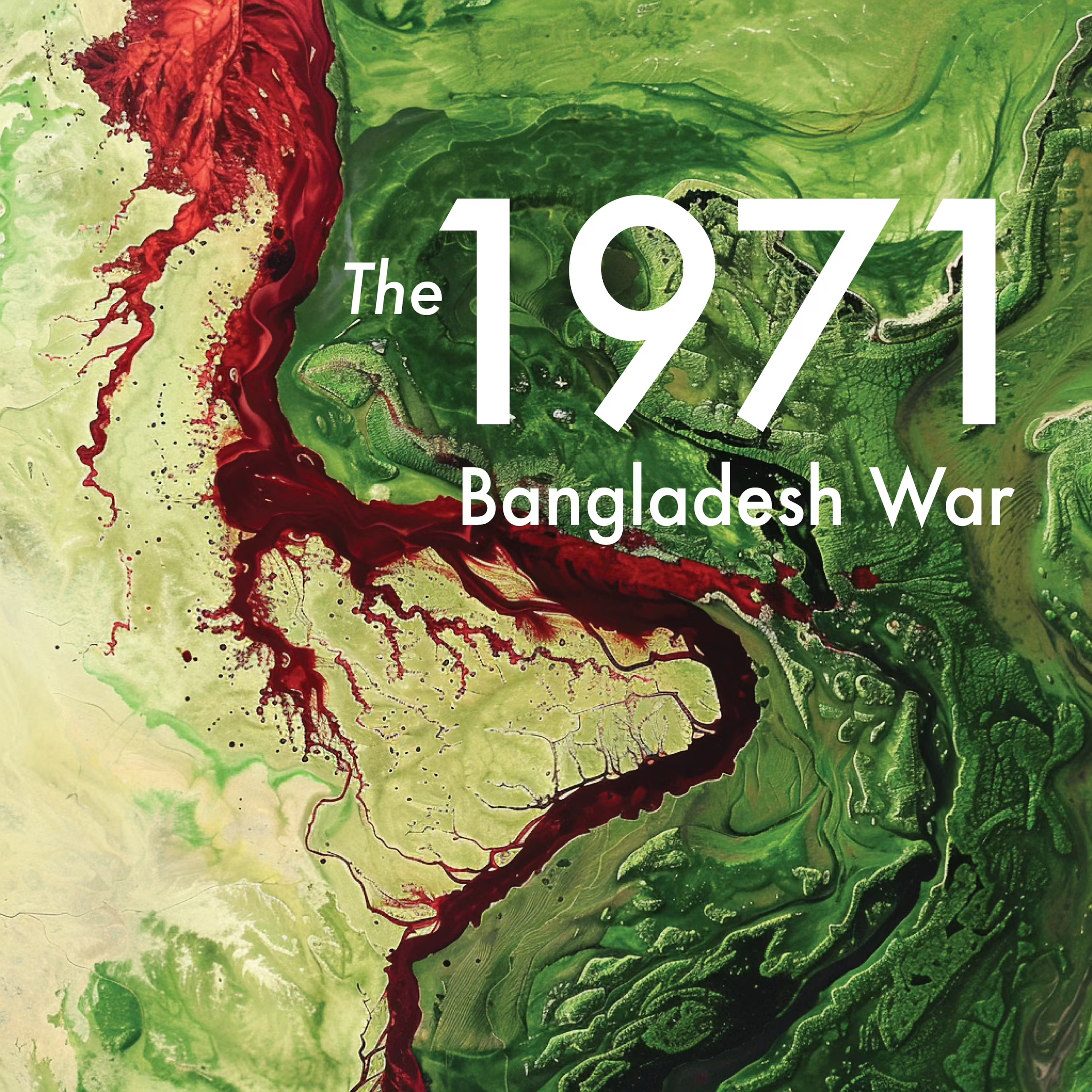
Fifty-five years ago today, a man stood before a shattered but defiant nation and declared it free. Sheikh Mujibur Rahman’s declaration of independence from Pakistan in the early hours of March 26, 1971 was not merely a political act. It was an act of civilisational courage a people insisting, at the cost of extraordinary blood, that they would no longer be governed by a state that saw them as a province and treated them as a population to be managed through organised violence. What followed was a war of liberation so brutal, so systematic in its atrocity, that the world still does not look at it with the full moral honesty it deserves. Three million dead. Two hundred thousand women violated. Ten million refugees. Operation Searchlight Pakistan’s military campaign of deliberate mass murder remains one of the twentieth century’s unreckoned genocides.
India looked at all of it. And India bled.
Indian soldiers died liberating a nation not their own. Indian taxpayers funded a war that was not theirs to fight. Prime Minister Indira Gandhi defied American pressure a hostile telegram from President Nixon, a nuclear-armed carrier fleet sent into the Bay of Bengal as explicit warning to stand on the right side of history. Bangladesh did not emerge from a vacuum. It emerged because India decided, at significant cost, that some causes were worth American displeasure, Soviet alliance, and military sacrifice. That history is not sentiment. It is a strategic debt whose ledger, on this fifty-fifth Independence Day, has acquired a deeply troubling new entry.
What the Raids Revealed This Morning
On the same morning that Bangladesh raises its flag and plays its anthem, Counterintelligence Kashmir conducted raids across Srinagar, Shopian, and Ganderbal. The investigation targets a transnational terror module linked to Pakistan’s Lashkar-e-Taiba, allegedly directed by an operator based in Bangladesh Shabir Ahmad Lone, a Kashmir-native LeT operative currently running networks from Bangladeshi soil.
This is not an isolated incident. In December 2025, Lone instructed operatives to conduct reconnaissance of sensitive Indian establishments, recruiting Bangladeshi nationals for operational support. A Kolkata hideout was identified as the base for a self-sustained module deliberately designed to procure arms locally within India to evade cross-border detection. Earlier, Indian agencies busted an ISI-backed module plotting attacks on temples and the Red Fort, aimed at inciting communal violence before state elections. The pattern is not random. It is architectural. Someone is building something methodically, patiently, and from a geography India historically considered friendly.
The Structural Collapse of a Trusted Neighbour
To understand how Bangladesh became a corridor for anti-India networks, one must understand what changed in August 2024 and what was irretrievably lost with it.
During Sheikh Hasina’s tenure, Dhaka dismantled anti-India insurgent camps and handed over several ULFA leaders to Indian authorities. That Delhi-Dhaka security collaboration was the backbone of India’s eastern stability for fifteen consecutive years. It was not merely diplomatic relationship it was a living security architecture, built brick by brick across two decades of careful partnership.
Hasina’s fall shattered that architecture overnight. Shashi Tharoor, in Pax Indica (2012), argues with uncomfortable accuracy that India’s neighbourhood policy has historically suffered one foundational flaw: it invests in governments rather than peoples, in relationships rather than institutions. When the government changes, the policy collapses. Bangladesh 2024 is the most painful proof of that thesis in a generation. India built its eastern security policy around a personality. The personality fell. The policy fell with her.
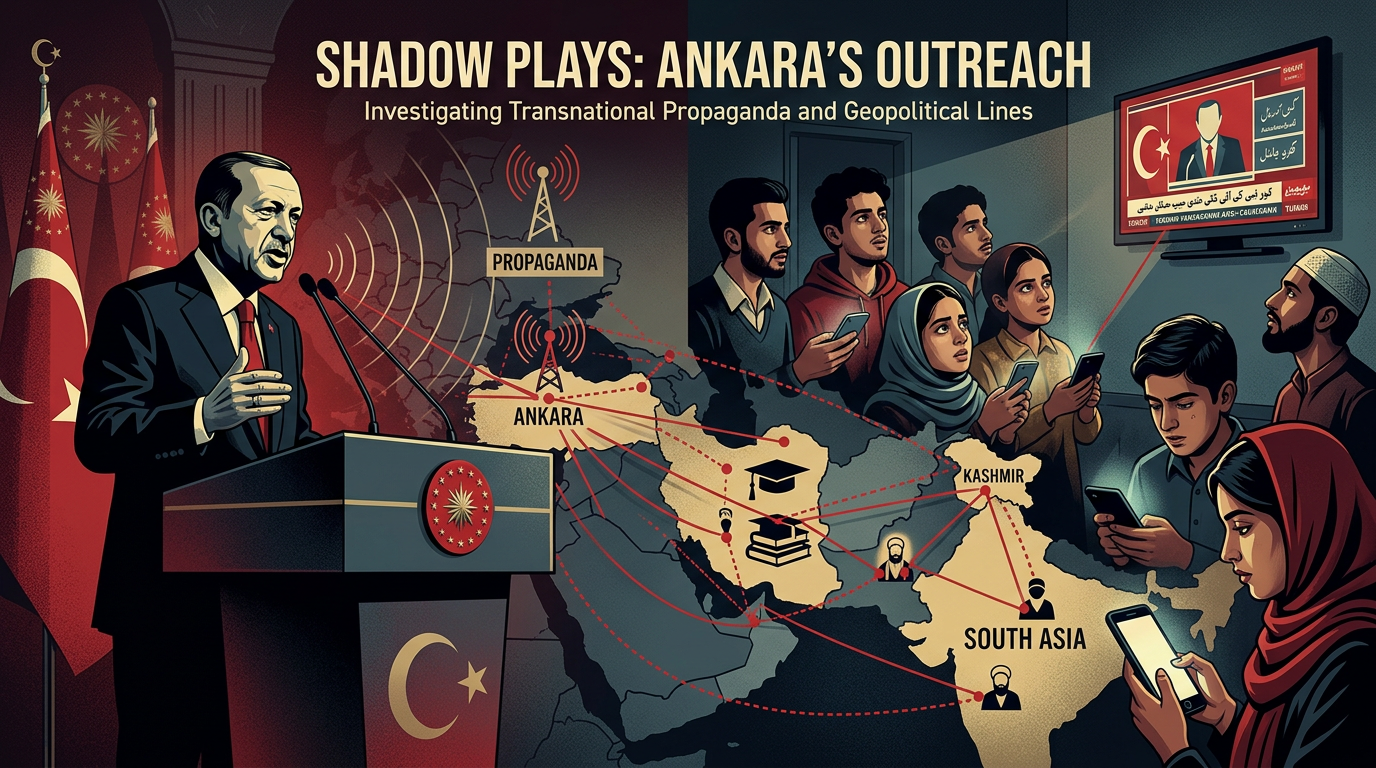
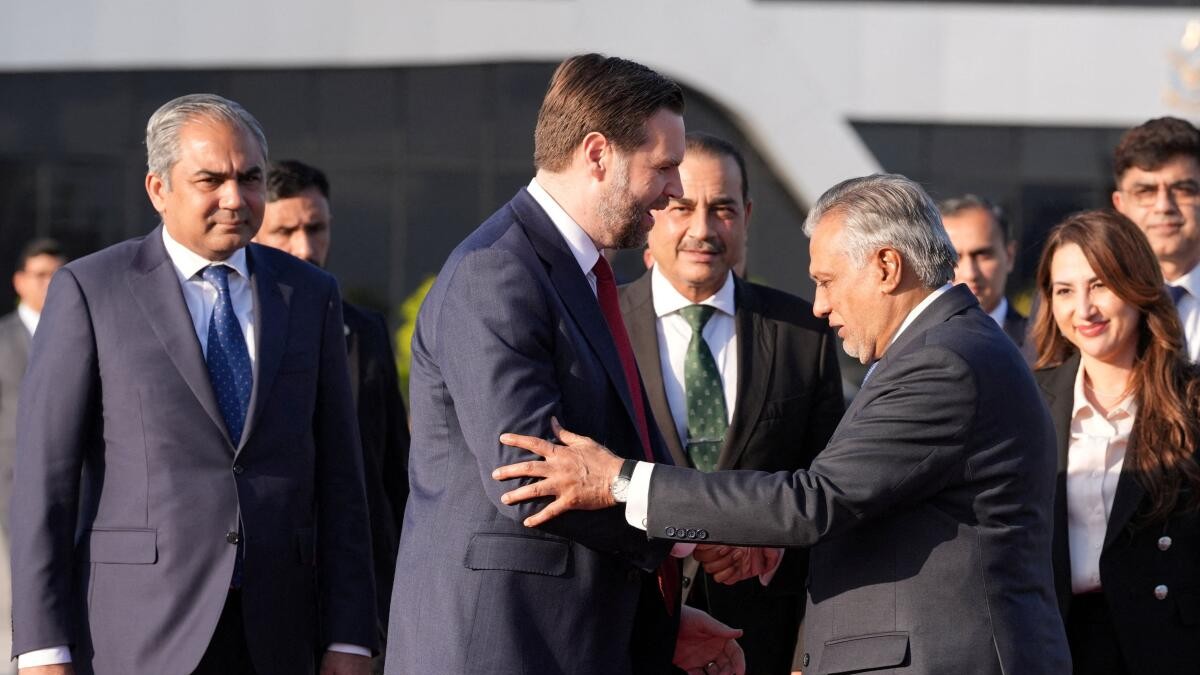
Muhammad Yunus met Pakistani PM Shehbaz Sharif twice. Direct flights between Dhaka and Pakistani cities resumed. Bangladesh lifted visa restrictions for Pakistani passengers. For the first time since 1971, cargo ships from Karachi docked at Chittagong a port whose liberation cost Indian naval blood. Yunus, during his March 2025 China visit, described India’s northeastern states as “landlocked” and characterised Bangladesh as “the sole guardian of the ocean” that could serve as an extension of the Chinese economy. These were not careless words. They were a strategic signal addressed simultaneously to Beijing, Islamabad, and a domestic audience conditioned by cultivated anti-India sentiment.
Pakistan’s Masterstroke Through Dhaka
What Rawalpindi could not achieve through direct Kashmir infiltration, it is attempting through strategic triangulation using Bangladesh as a rear operational base, leveraging Dhaka’s geographic position to insert networks into eastern India, and simultaneously pressing J&K from the west through traditional LOC-based infiltration. The sophistication is deliberate. The Kolkata module designed to source arms locally, avoiding cross-border detection represents a doctrinal evolution in ISI operational methodology.
But the Pakistan-Bangladesh terror architecture runs deeper than any single operative or module. It represents a decade-long ISI investment, accelerated dramatically after August 2024. Pakistani intelligence agencies identified Bangladesh’s post-Hasina institutional vacuum as a generational opportunity the kind that presents itself once in a strategic lifetime. The playbook is documented, familiar, and devastatingly effective: identify ideologically receptive elements within local Islamist organisations, embed ISI handlers under commercial and diplomatic cover, establish financial transfer mechanisms through hawala networks, recruit locally to build deniable cells, and target India’s most sensitive geographic vulnerabilities.
Jamaat-e-Islami Bangladesh historically the party that collaborated with Pakistani forces during 1971’s genocide, whose leaders were convicted by Bangladesh’s own International Crimes Tribunal has experienced a significant revival since August 2024. Its rehabilitation is not coincidental. ISI’s relationship with Jamaat stretches back to 1971 itself, when Jamaat’s al-Badr militia served as Pakistan Army’s local executioners, specifically targeting Bengali intellectuals, professors, doctors, and journalists for elimination. That institutional relationship ISI and Jamaat never fully dissolved. It merely went dormant under Hasina’s security pressure. The dormancy ended with her flight from Dhaka.
Brahma Chellaney, in Water: Asia’s New Battleground (2011), warns that geography in South Asia is not merely physical reality but political weapon. The Pakistan-Bangladesh-India terror triangle exploits precisely this geographic logic: ISI provides ideology, financing, and operational direction from Rawalpindi; Bangladeshi territory provides sanctuary, recruitment ground, and geographic proximity to India’s most vulnerable corridor; Kashmir-origin operatives like Shabir Ahmad Lone provide the local knowledge, linguistic cover, and community networks to penetrate Indian security’s eastern defences. It is a three-node network deliberately engineered to maximise deniability at every junction.
The new BNP government in Dhaka inherits this network. Whether it has the institutional capacity or the political will to dismantle what eighteen months of vacuum allowed to assemble is the most consequential security question on India’s eastern frontier in 2026.
The Chicken’s Neck and Civilisational Stakes
Bangladesh’s position encircling India’s northeastern corridor the narrow Siliguri passage, the Chicken’s Neck connecting mainland India to seven northeastern states means that instability in Dhaka is never bilateral. It is existential arithmetic. The corridor, at its narrowest barely 22 kilometres wide, connects Assam, Meghalaya, Tripura, Manipur, Mizoram, Nagaland, and Arunachal Pradesh to the rest of India.
India’s northeastern insurgencies Bodo, ULFA, NSCN historically used Bangladeshi territory for sanctuary, arms transit, and ideological replenishment. That infrastructure, painstakingly dismantled under Hasina, is reassembling. The Ganges Water Sharing Treaty expires in 2026. CEPA sits shelved indefinitely. Across 4,156 kilometres of shared border flows not just trade and transit, but ideology, infiltration, and demonstrably, operational terror logistics.
THE NATION WE BLED FOR
The BNP Moment: Window or Illusion?
The BNP’s commanding February 2026 election victory has been cautiously welcomed in New Delhi. Tarique Rahman is not Yunus. The BNP has economic incentives requiring Indian cooperation. But cautious optimism must not become comfortable amnesia. The terror module operating from Bangladeshi soil was assembled during eighteen months of institutional gap it will not dismantle itself because a new government has taken oath.
India must demand, not simply request, what its 1971 sacrifices morally entitle it to expect: that the soil of the nation it helped free cannot be used to attack it. Policy must outlive personalities. Counterterrorism infrastructure databases, extradition protocols, joint mechanisms, border management frameworks requires deliberate, verifiable reconstruction. Goodwill is not a security architecture.
The Moral Ledger
On this fifty-fifth Independence Day, two things are simultaneously true. Bangladesh earned its freedom through genuine, extraordinary suffering three million dead, a civilisational identity nearly extinguished. That freedom deserves full, unconditional respect.
And India made that freedom possible through military sacrifice, diplomatic courage, and the willingness to stand against American nuclear pressure when the alternative was watching genocide proceed unchallenged. That contribution does not purchase Bangladesh’s permanent subordination. But it establishes a moral floor: the nation whose liberation cost Indian blood will not permit its geography to become a staging ground for Indian deaths.
The Bangladeshi flag rises today over a nation built on martyrs’ sacrifice. In Srinagar’s investigation rooms this morning, another martyrs’ sacrifice is being recorded killed by networks that found sanctuary in the nation India bled to create.
History extended a hand in 1971. Geography is demanding an answer in 2026.
THE NATION WE BLED FOR – 2026
THE NATION WE BLED FOR – 2026
THE NATION WE BLED FOR – 2026
THE NATION WE BLED FOR – 2026
THE NATION WE BLED FOR – 2026
THE NATION WE BLED FOR – 2026
About The Author